Custom home
Site, size, roof form, glazing and level of finish. Custom homes.
We don't publish square-metre rates, because they mislead. This guide explains what actually drives the cost of a custom home, renovation, second storey or knockdown rebuild, and how the fixed-price tender turns your site and brief into one number.
Takes 30 seconds. Keiron Moore, the builder, runs every site assessment himself.
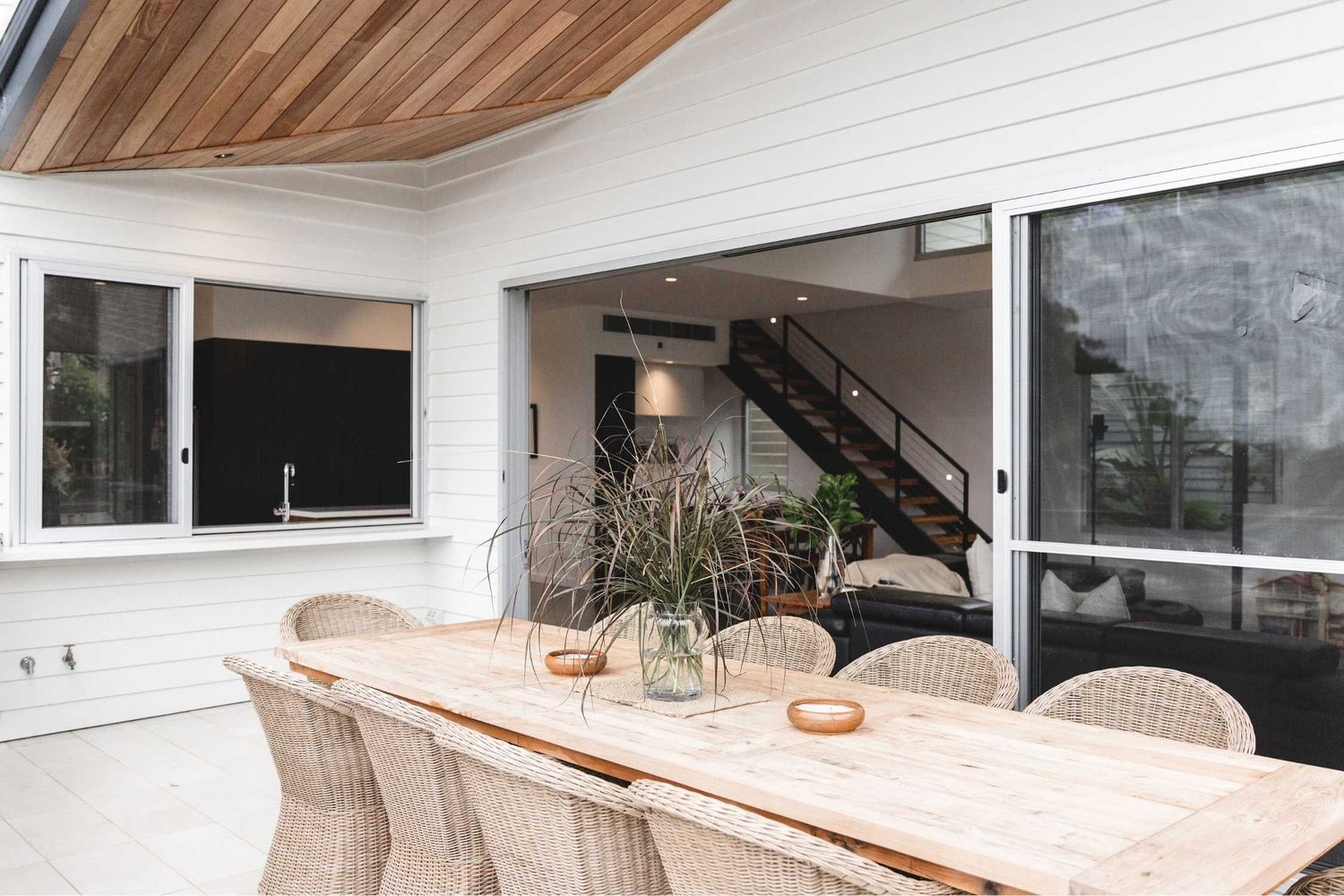
Pictured: Sandhurst Bulli in Bulli, NSW, a custom home by CKS Projects.
The price of a high-end home or renovation is set by the site, the design, the level of finish, the existing house (for renovations) and the approval pathway. Those are known only after someone has stood on the block and read the planning certificate.
That's why every CKS Projects client receives a detailed fixed-price tender before any contract is signed, with no provisional sums hiding unknowns.
| Published rates | None: a rate applied to your block would mislead |
|---|---|
| What you receive | A detailed fixed-price tender before any contract |
| Provisional sums | None hiding unknowns |
| Deposit | No more than 10% under a NSW home building contract |
| Insurance | Home building compensation cover for work over $20,000 |
| Stamp duty | None when you rebuild on land you already own |
Six things move the number. Each one is pinned down before the fixed price is set.
| Driver | What it affects | How it's pinned down |
|---|---|---|
| The site | Slope and soil (engineered footings, retaining, split levels), access for machinery and deliveries, and any bushfire, flood or foreshore overlay | Survey, geotechnical report, planning certificate |
| The design | Size, storeys, roof form, glazing and structural complexity | Concept design and engineering |
| The level of finish | Joinery, materials, fittings and selections | Selections, priced in the tender's inclusions list |
| The existing house | For renovations, extensions and second storeys: asbestos, old wiring and plumbing, and footings that need strengthening | Inspection of the house before the price is fixed |
| The approval pathway | A DA takes longer than a CDC, and overlays add reports and documentation | Planning certificate and LEP maps at the site assessment |
| Demolition | For a knockdown rebuild: the size and type of the old house, asbestos, and service disconnections | Asbestos inspection and demolition scope |
Site, size, roof form, glazing and level of finish. Custom homes.
What's behind the walls, how much of the layout changes, and the finish. Home renovations.
Strengthening the existing structure, the stair, the roof and the new level's size. Second-storey additions.
New footings, the tie-in to the existing house and the finish. Home extensions.
Demolition scope, asbestos, slope and soil, and the new home itself. Knockdown rebuilds.
Excavation, retaining, engineered footings, stormwater and the number of levels. Sloping and waterfront blocks.
The tender prices the full scope up front: site costs and engineered footings, approvals and certification fees, construction, demolition and asbestos removal where the project needs them, and a defined inclusions list for fittings and finishes.
There are no provisional sums hiding unknowns, so the only thing that changes the number after contract is a variation you choose to make. When you compare builders, ask each one whether the contract is genuinely fixed or contains provisional sums.
Contract rules: written contract over $5,000; large-job contract and home building compensation cover over $20,000; deposit capped at 10% (NSW).
Because a rate applied to your block would be misleading. Two homes of the same size can differ widely in cost because of the slope, the soil, access, the overlays on the lot and the level of finish. Every client receives a detailed fixed-price tender, built from their own site and brief, before any contract is signed.
It depends on the site, the design and the finish, so we don't quote a figure before seeing the block and the brief. We build high-end custom homes, so we're the right builder when the brief is a home designed for its block rather than the lowest possible price. The drivers above are what move the number.
The biggest variable is the existing structure: how much the footings and frame need strengthening to carry the new level. Then the size of the addition, the stair, the roof, the finish and the approval pathway. See second-storey additions.
On a lot of older housing, often, though not on paper. A renovation quote starts lower because it can't yet price what is behind the walls, and the variations grow once the walls come open. A rebuild is priced from a survey, a geotechnical report and a complete design, so the contract figure is known before work starts. There is also no stamp duty when you rebuild on land you already own.
Budget separately for temporary accommodation if you can't stay in the house, council and certifier fees where they aren't included, land tax or holding costs during construction, and your lender's fees on a construction loan.
Under a standard NSW home building contract you pay a deposit, capped at 10%, then progress payments as defined stages are completed, typically base or slab, frame, enclosed or lock-up, fixing and practical completion. Each payment is claimed against work actually done. The stage schedule and the amount for each stage are set out in the tender.
A fixed price needs your site and your brief. Tell us both, and the site assessment is the first step to a detailed tender you can compare like for like.
Related services