Duplex vs Dual Occupancy in NSW: Title, Approvals and Resale Explained
"Dual occupancy" is the NSW planning term for two dwellings on one lot; a duplex is the attached version. What changes your options is title: subdivided, each half becomes a semi-detached dwelling that can be sold on its own.
Duplex vs Dual Occupancy: The Short Answer for NSW
In NSW, "dual occupancy" is the planning term and "duplex" is the everyday word. A dual occupancy is two dwellings on one lot of land. When the two homes share a wall it is an attached dual occupancy, which is what most people mean by a duplex. When they stand apart it is a detached dual occupancy.
The difference that matters to your money is title. While both homes sit on one lot, they are one property. Once the lot is subdivided, by Torrens title or strata, each home can be sold, mortgaged or rented on its own, and in planning language each half of a duplex becomes a semi-detached dwelling.
How the NSW Planning System Names a Duplex
Every council in NSW writes its local environmental plan (LEP) on the same Standard Instrument, so the same terms appear in the Sutherland Shire Local Environmental Plan 2015, the Georges River Local Environmental Plan 2021 and the Wollongong Local Environmental Plan 2009. These are the ones you will meet:
| Term | What it means | Title |
|---|---|---|
| Dual occupancy (attached) | Two dwellings on one lot, joined by a common wall or floor. The everyday "duplex". | One lot until subdivided |
| Dual occupancy (detached) | Two separate dwellings on one lot, for example a front and a rear home. | One lot until subdivided |
| Semi-detached dwelling | A dwelling on its own lot, attached to only one other dwelling. | Its own lot: the result of subdividing a duplex |
| Secondary dwelling | A smaller self-contained dwelling (a granny flat) that stays with the main house. | Cannot be subdivided off |
So a "duplex" can be two different things on paper: an attached dual occupancy on one title, or a pair of semi-detached dwellings on two titles. Agents use the word for both, which is why buyers and owners get confused. The approval documents always use the planning term.
Torrens Title or Strata Title: Choosing How to Split a Duplex
Torrens title subdivision
Each owner holds their own lot, including the land under their half of the building and their own yard. There is no owners corporation and no shared levies. Torrens title is usually what buyers and lenders prefer for a duplex, but the subdivision must meet the minimum lot size and frontage that apply to the land.
Strata title subdivision
Strata title, under the Strata Schemes Development Act 2015, divides the building into lots with shared common property. It can work where a Torrens split does not, but it brings a strata scheme, by-laws and shared costs for common property.
Keeping one title
Some owners never subdivide: they live in one home and rent the other, or house family. That keeps one set of rates and one mortgage, but you cannot sell one home on its own.
Decide on title before design starts, because it changes the layout, the services (separate water and power connections for each lot) and the approval you ask for.
Duplex Approvals in NSW: Low and Mid-Rise Housing, CDC or DA
Low and Mid-Rise Housing reforms
The NSW Government's low and mid-rise housing changes came in two stages. Stage 1, from 1 July 2024, allowed dual occupancies and semi-detached dwellings in R2 Low Density Residential zones across NSW. Stage 2, from 28 February 2025, added standards for land within about 800 m walking distance of nominated town centres and stations, in areas that include Greater Sydney and the Illawarra-Shoalhaven. Inside those mapped areas a dual occupancy needs a lot of at least 450 m² and 12 m wide, with a floor space ratio of 0.65:1, a height of 9.5 m and one car space per dwelling, and the lot can be subdivided down to 225 m² and 6 m wide per lot. High bushfire and flood risk land and heritage items are excluded. Outside the mapped areas, your council's LEP and development control plan (DCP) set the rules.
Complying development under the Low Rise Housing Diversity Code
Where the LEP already permits dual occupancy and the design meets every standard in the Low Rise Housing Diversity Code, a duplex of up to two storeys can be approved as complying development (a CDC), in as little as 20 days. Where the LEP sets no minimum lot size for dual occupancy, the code's default minimum is 400 m². Neighbour notification can stretch the timing.
Development application
Anything that does not fit the code goes to council as a development application (DA): a block that is too narrow, a design that varies a control, or land with constraints such as bushfire, flooding or heritage. A DA takes longer but can approve a design the code cannot.
Both paths need a BASIX certificate for each dwelling. Our Sutherland Shire approvals guide walks through the CDC and DA steps in more detail.
Sources: NSW Planning, low and mid-rise housing policy · NSW Planning Portal, Low Rise Housing Diversity Code · NSW Planning Portal, BASIX.
Building a Duplex in Sutherland Shire or South of the Royal National Park
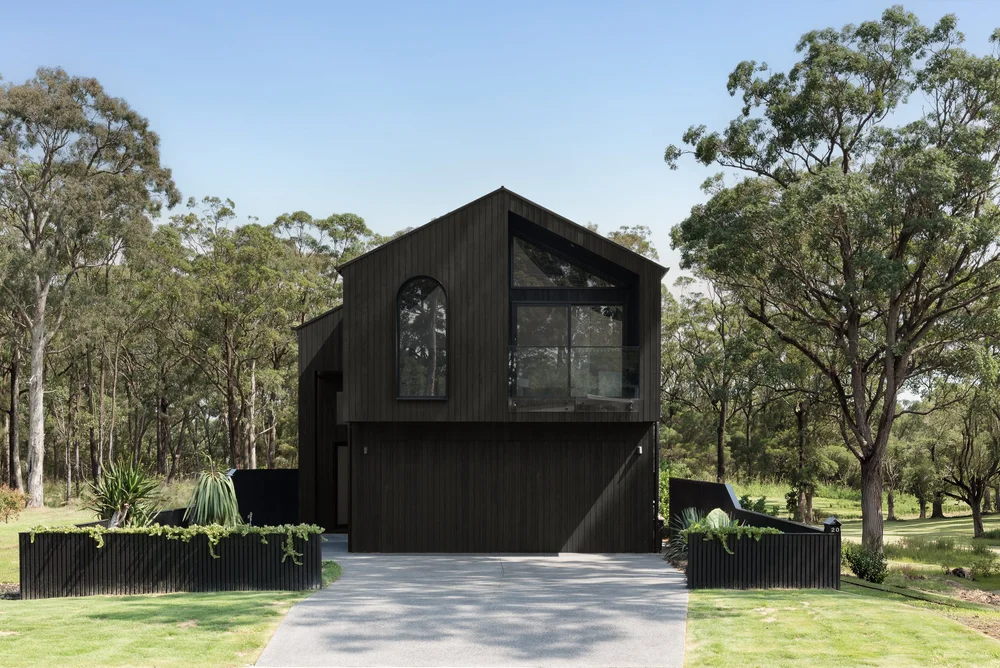
In Sutherland Shire, older homes on R2 lots in suburbs like Miranda, Gymea, Kirrawee and Jannali are the usual candidates for a duplex, subject to the lot size and width. The Shire process is covered on our Sutherland Shire duplex page.
Cross the Royal National Park and the council changes. Helensburgh, Stanwell Park and the northern beaches suburbs down to Thirroul sit in the City of Wollongong, under the Wollongong LEP 2009 and DCP 2009, and many lots there are steep, bushfire prone or both. Our office is in Unanderra, and the Wollongong side of our work, including duplex construction in Wollongong and the northern Illawarra, is set out in detail on our main company site, with completed duplexes and the steps for Wollongong City Council.
Whichever council you are under, the first check is the same: the section 10.7 planning certificate for the lot, which shows the zone and the overlays (bushfire, flood, heritage) that decide whether a duplex is possible and which approval path it takes.
Which Suits You: Duplex, Detached Dual Occupancy or a Granny Flat?
- A duplex to sell one half: attached dual occupancy, then Torrens subdivision where the lot allows it.
- Two homes for one extended family: often a detached dual occupancy on one title, with more privacy between the homes. Our guide to two homes on one block for families covers this.
- A small home for a parent or adult child: a secondary dwelling (granny flat), which cannot be subdivided and sold.
- An old house on the block now: a knockdown rebuild as a duplex. See knock down rebuild or renovate.
Duplex vs Dual Occupancy: Common Questions
Is a duplex the same as a dual occupancy?
Almost. In NSW, "dual occupancy" is the planning term for two dwellings on one lot; an attached dual occupancy is what most people call a duplex. Once the lot is subdivided, each half becomes a "semi-detached dwelling" on its own title.
Can I sell one half of a duplex?
Only after the lot is subdivided, by Torrens title or strata title. While both homes are on one lot they are one property. Check the minimum lot size and frontage for subdivision before design starts.
Can I build a duplex under complying development?
Often. Where the LEP permits dual occupancy and the design meets the Low Rise Housing Diversity Code, a CDC can be issued in as little as 20 days for a duplex of up to two storeys. Otherwise, a development application goes to council.
What lot size do I need for a duplex in NSW?
Inside the mapped low and mid-rise housing areas (Stage 2, from 28 February 2025), 450 m² and 12 m wide. Elsewhere, the council's LEP sets the minimum, and the Low Rise Housing Diversity Code uses 400 m² where the LEP is silent. Always confirm on the planning certificate.
Is Helensburgh in Sutherland Shire?
No. Helensburgh and Stanwell Park are in the City of Wollongong, so the Wollongong LEP 2009 and DCP 2009 apply, not the Sutherland Shire LEP 2015.
Book Your Free Discovery Call
Tell us about the block and what you want to build. We'll talk through what's possible, the likely approval pathway and what the project is likely to involve.
Related services